

Introduction
Overview of influencer marketing
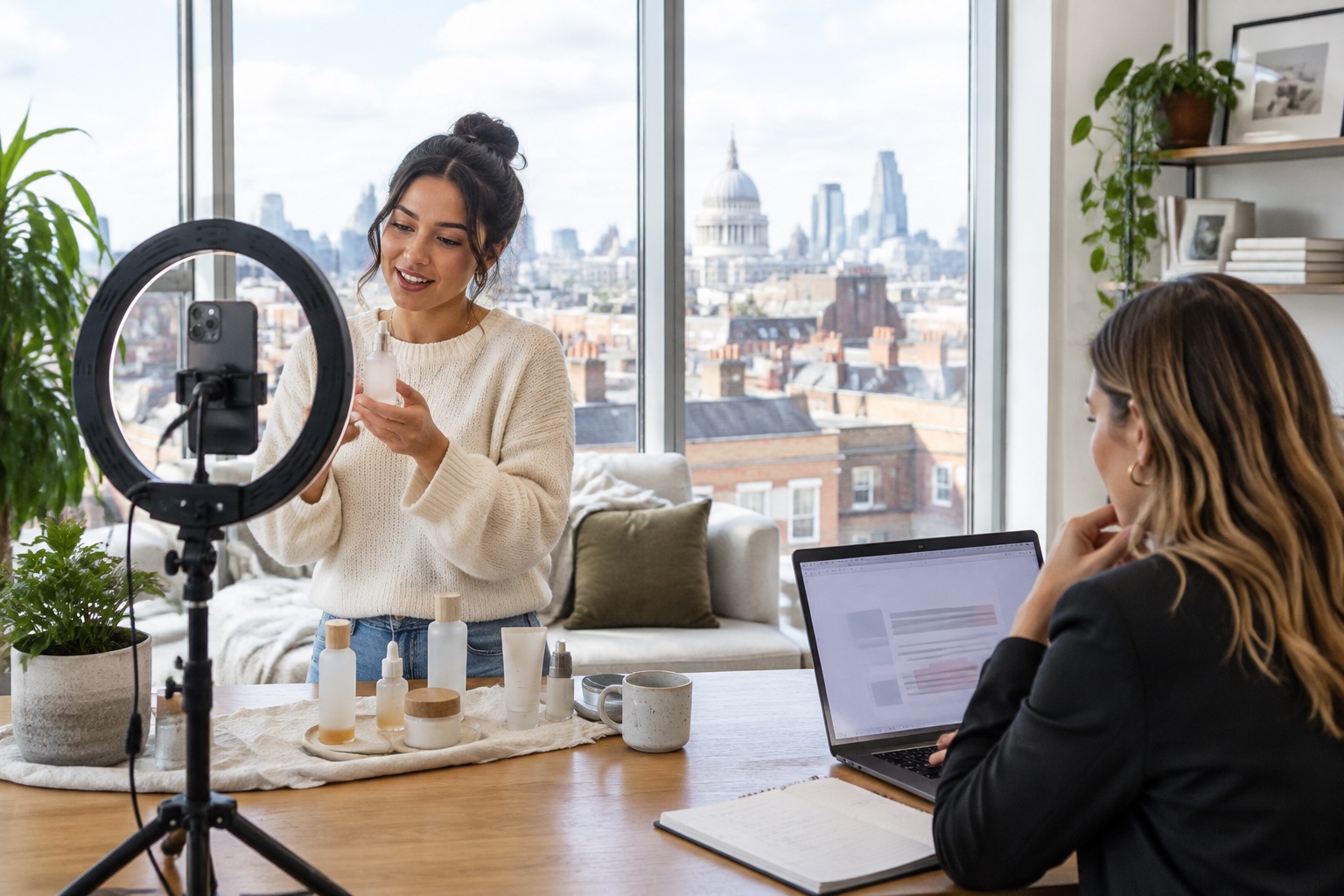
Influencer marketing is a form of marketing where brands work with content creators, people with engaged followings on Instagram, TikTok, YouTube and other platforms, to promote products, services or messages. Instead of speaking to audiences directly through ads, brands borrow the trust and creativity creators have built with their communities.
Influencer marketing has grown from gifted products and one-off sponsored posts into a mature channel. Campaigns now range from long-term ambassador programmes and product launches to user-generated content (UGC) for ads, live shopping and event coverage. Creators range from nano-influencers with a few thousand followers to celebrities with millions, and smaller creators often deliver higher engagement and more authentic recommendations.
In the UK, influencer marketing is regulated. The Advertising Standards Authority (ASA) and the Competition and Markets Authority (CMA) expect paid or incentivised content to be clearly labelled as advertising, usually with “#ad” or “Ad” at the start of the post. Brands and agencies, not just creators, share responsibility for compliance.
Importance of choosing the right influencer agency
An influencer agency can save time, reduce risk and improve results, but the wrong partner can waste budget on mismatched creators, fake followers or campaigns that do not connect to business goals. Because influencer marketing relies on trust, a poorly chosen creator or a non-compliant post can also harm your reputation.
Choosing the right influencer agency in London means finding a partner whose expertise, creator network, processes and pricing fit your brand, audience and objectives. The rest of this guide explains how.
The landscape of influencer agencies in London
London’s influencer scene is fuelled by its concentration of media, fashion, beauty, food, tech and entertainment brands, as well as a large and diverse creator community. Agencies range from boutique specialists to global networks, and many work with brands across the UK and internationally. Outside the capital, cities such as Manchester and Leeds also have growing influencer marketing agencies, often with lower costs and strong regional creator networks.
Types of influencer agencies
- Influencer marketing agencies: plan and run campaigns for brands, from strategy and creator selection to content approval, reporting and paid amplification.
- Influencer talent agencies: represent creators, negotiating brand deals, managing schedules and developing their careers. Brands contact an influencer talent agency in London to book specific creators.
- Full-service and social agencies with influencer teams: combine influencer work with social media management, content, paid social and PR.
- UGC and creator content agencies: source creators to make content for brands’ own channels and ads rather than posting to their own followers.
- Platform-led agencies and marketplaces: use software to match brands with creators, often suited to smaller budgets and self-managed campaigns.
- Niche specialists: focus on sectors such as beauty, gaming, food, B2B or parenting, or platforms such as TikTok or YouTube.
Key players in the market
London is home to many well-known influencer agencies. The examples below are listed neutrally and alphabetically for research; they are not rankings or endorsements, and services change, so check each agency’s current offering directly.
- Billion Dollar Boy: creator-focused agency working with global brands on influencer and creator campaigns.
- Disrupt: influencer marketing agency known for social-first creator campaigns.
- The Fifth: creator and influencer agency working on branded content.
- Gleam Futures: talent management and creator business, representing creators.
- Socially Powerful: social and influencer marketing agency with international offices.
- The Goat Agency: influencer marketing agency focused on creator campaigns at scale.
Researching other agencies
Beyond larger names, many smaller and independent influencer marketing agencies in London offer more personal service and lower minimum budgets. Search for agencies with experience in your sector, review their case studies and ask peers for recommendations.
Benefits of partnering with an influencer marketing agency
An influencer marketing agency brings expertise, relationships and processes that are hard to build in-house, especially for small and growing businesses.
Increased brand awareness
Creators can introduce your brand to large, engaged audiences in an authentic way. A well-planned campaign with the right creators can quickly raise awareness, especially for launches, new markets or events. Agencies help amplify reach by coordinating multiple creators, timing posts and, where appropriate, boosting creator content with paid social (sometimes called whitelisting or partnership ads).
Targeted audience reach
Agencies use data and experience to match brands with creators whose audiences fit their target customers by age, location, interests and values. They check audience quality, engagement and authenticity to avoid fake followers. For local businesses, they can find London creators or neighbourhood-focused accounts that reach nearby customers.
- Expert creator selection and vetting.
- Negotiation of fees, usage rights and contracts.
- Creative briefs and content approval.
- Compliance with ASA and CMA rules.
- Campaign management, reporting and optimisation.
- Time saved for your team.
How to choose the right influencer agency London
Assessing your brand’s needs
Start by clarifying what you want to achieve and what you can invest. Agencies vary widely in focus, size and minimum budgets.
- Goals: awareness, engagement, website traffic, sales, app installs or content for ads.
- Audience: who you want to reach and which platforms they use.
- Budget: total campaign budget including creator fees, agency fees and paid amplification.
- Scope: one campaign, a series, or an ongoing ambassador programme.
- In-house capacity: whether you want full management or support with specific tasks.
- Measurement: how you will judge success, such as sales, discount code use or tracked clicks.
Evaluating agency reputation and portfolio
Look closely at an agency’s track record and how it works.
- Case studies: results in your sector, with clear goals and measurable outcomes.
- Client references: speak to current or recent clients.
- Creator network: how they find, vet and manage creators, and whether they use tools to check for fake followers.
- Compliance: how they ensure ads are labelled in line with ASA and CMA guidance.
- Reporting: which metrics they report and how often.
- Contracts and rights: who owns content and how it can be reused.
- Fit: whether the team understands your brand and communicates clearly.
Understanding pricing models
Influencer agencies in London use several pricing models, and costs vary widely depending on scope, creator size and agency. Ask for a clear breakdown of creator fees, agency fees, production costs, usage rights and paid media.
- Retainer: a monthly fee for ongoing strategy and management.
- Project fee: a fixed price for a defined campaign.
- Percentage of spend: the agency takes a share of the total campaign or creator budget.
- Performance-based: fees tied to results such as sales or clicks, sometimes combined with a base fee.
- Platform or marketplace fees: subscription or per-campaign fees for self-service tools.
Questions to ask in a pitch
- Which creators would you suggest, and why do they fit our audience?
- How do you check audience quality and authenticity?
- How will posts be labelled, and who checks compliance?
- What results can we expect, and how will you measure them?
- What are the total costs, including creator fees and usage rights?
- What happens if a creator underperforms or misses a deadline?
Influencer marketing on a smaller budget
Not every business needs a full agency. Smaller brands can work directly with local micro-creators, offer gifted products (still labelled appropriately) or use platform marketplaces. Combining influencer activity with consistent posting on your own channels makes campaigns more effective, because new followers find an active, trustworthy profile.
SociGen is AI-assisted social media software, not an influencer agency. It helps small businesses keep their own Facebook and Instagram channels active with on-brand posts, images, a content calendar, scheduling and replies, so creator traffic lands on a strong profile. The no-deadline free trial includes five text posts and up to ten AI image credits.
Conclusion
Recap of key points
- Influencer marketing helps brands reach engaged audiences through trusted creators.
- London offers marketing agencies, talent agencies, full-service teams, UGC specialists and platforms.
- Agencies can increase awareness and target the right audiences while managing creators and compliance.
- Choose by assessing your needs, checking reputation and case studies, and understanding pricing.
- Follow ASA and CMA rules: label paid and incentivised content clearly.
Final thoughts on influencer marketing
The rise of the influencer agency in London reflects how central creators have become to modern marketing. The best partner is one that understands your brand, chooses creators for fit rather than follower count, is transparent about costs and measures results against your goals. Take time to compare agencies, ask detailed questions and start with a test campaign before committing to a long-term relationship.
Frequently asked questions
What does an influencer agency in London do?
It plans and runs campaigns with content creators, including strategy, creator selection, contracts, content approval, compliance and reporting.
What is the difference between an influencer marketing agency and a talent agency?
A marketing agency works for brands to run campaigns. A talent agency represents creators and negotiates their brand deals.
How much does an influencer agency in London cost?
Costs vary widely by scope, creators and agency. Pricing can be a retainer, project fee, percentage of spend or performance-based; ask for a full breakdown.
Do influencer posts need to be labelled in the UK?
Yes. The ASA and CMA expect paid or incentivised posts to be clearly labelled, usually with “#ad” or “Ad” at the start.
Are there influencer marketing agencies outside London?
Yes. Cities such as Manchester and Leeds have growing influencer marketing agencies, often with strong regional creator networks.
Explore the next step
Comparing wider social media support? Read our London agency guide.
- Social media marketing agencies in London
- Current SociGen features and subscription inclusions
- Core and optional Email & CRM pricing
- How AVA Training in Belfast uses SociGen
- The introductory UK marketing automation guide
Sources and further reading
Product statements follow SociGen’s current feature catalogue. Examples are illustrations, not measured customer results. Check current official guidance for your own circumstances; this is not legal advice.